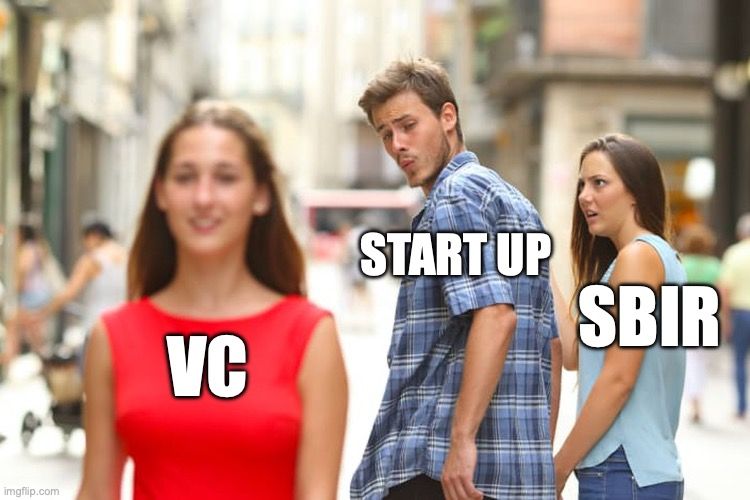
Over $16 billion in venture capital went into defense companies last year. Combined valuations accelerating past $130 billion. Over 300 firms now investing in the sector, up from fewer than 100 in 2017.
How does all this private capital reshape the defense industrial base?
Wrong question. Capital doesn't reshape anything. Execution reshapes things. Capital can make that execution possible but can also easily make failure more expensive.
Dan Folliard and Michael Sion lay out the alignment problem clearly at Breaking Defense. Four stars have to align: suppliers who can actually scale production, customers who shift spending toward what works, policymakers who sustain acquisition reform, and investors who exercise discipline over defense timelines.
Miss any one of those and watch out. Clean tech circa 2011. Space SPACs in 2021. Capital floods in, outcomes disappoint, returns disappear, and the sector gets (another) decade-long credibility hangover.
Here's what I'd add from the inside:
We see this alignment problem every week. A start-up or small business with a working prototype and a unit that wants it, but no acquisition pathway that moves fast enough to keep the company alive. An investor writes a check based on perception of the demand signal but doesn't see the POM cycle misalignment delaying real revenue 36 months or more. Or a program office that knows they have problems, wants to change, but their money is locked up with their out of touch incumbents chasing requirements built around yesterday's solutions. The incentive is to literally ignore what's possible and build what no one will need.
These aren't individual failures. They're system friction. And more capital doesn't solve system friction. It just raises the stakes of getting alignment wrong.
What actually works: small teams with real authority, close to the operational problem, empowered to buy what works and kill what doesn't. JIATF 401 spending $600M in months. DIU prototyping with end-users so the tech actually reaches the field. Flexible contracts that let companies prove capability before committing to production.
The money is here. The question is whether the system can absorb it at the speed the threat requires.
That's not a capital problem. It's an execution problem. And execution happens at the seams across the many stakeholders, not inside any one of them.